







How Do You Choose the Right Tires for a Ram 1500?
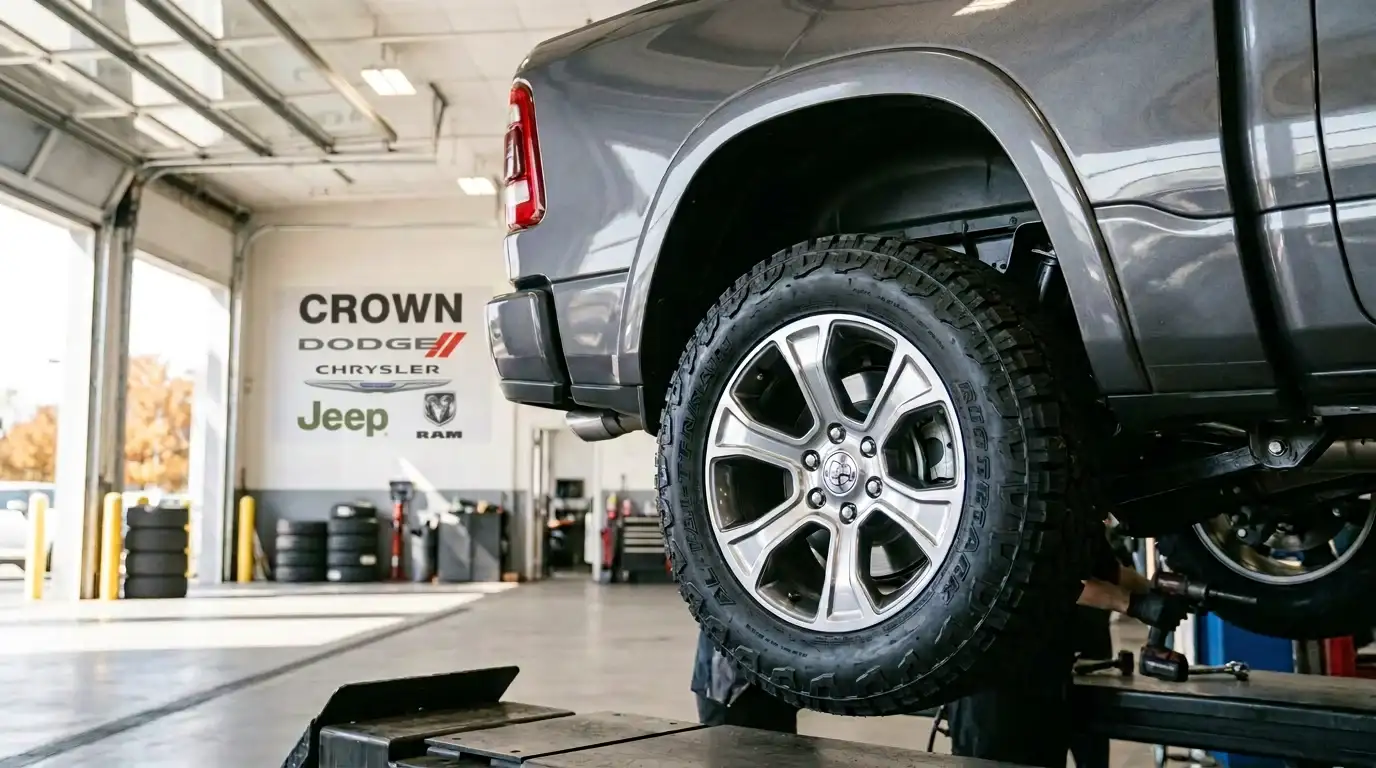
Selecting the right tires for a Ram 1500 requires matching your vehicle’s factory load ratings and rim dimensions with a tread pattern engineered for your daily driving environment and towing demands. Drivers must balance highway ride comfort, tread life, and seasonal traction against payload requirements by choosing certified original equipment sizes like 275/55R20 or 275/65R18 in appropriate load ranges.
Choosing light truck tires involves evaluating how your vehicle is used on a day-to-day basis. For light-duty half-ton trucks, stock tire setups are calibrated by factory engineers to deliver optimal fuel efficiency, predictable emergency handling, and low noise levels. However, matching tire specifications to real-world work requirements often means looking beyond standard street tires. Factors such as overall diameter, section width, tread block spacing, and ply ratings dictate how well a tire manages heavy bed loads, off-road gravel traction, and wet asphalt stopping distances.
When selecting replacement tires, review the tire indicator placard located inside the driver’s door jamb. This decal specifies the recommended cold inflation pressures along with factory-approved tire size designations and minimum load index numbers. Selecting a replacement tire with a lower load capacity than factory specifications compromises vehicle stability while hauling heavy equipment or towing trailers. Light truck owners needing enhanced durability often step up to an LT-metric option in a Load Range E rating, which utilizes stiffer sidewall construction to resist puncture damage and limit tread squirm under heavy loads.
Our factory-trained technicians at Crown Dodge Chrysler Jeep RAM can help evaluate your vehicle usage to recommend options that maintain original ride quality while meeting your utility requirements. Visit our Ventura facility at 6300 King Dr to inspect our inventory of factory-spec light truck tires, or speak directly with an advisor by calling our service team at (805) 918-4486 to discuss custom fitments and load specifications.
Table of Contents
- Can You Fit 35-Inch Tires on a Stock Ram 1500 Without a Lift Kit?
- Do All-Terrain Tires Wear Faster and Reduce Ram 1500 Towing Capacity?
- What Wear Patterns Signal Alignment Issues and How Do You Reset Ram TPMS?
- Where to Find Ram Truck Tire Installation, Price Matching, and Flat Repair Near Oxnard
- Frequently Asked Questions About Ram Tire Service and Installation
- Keep Your Ram 1500 Running Smoothly with Expert Service
Can You Fit 35-Inch Tires on a Stock Ram 1500 Without a Lift Kit?
Installing true 35-inch tires on a stock Ram 1500 without a suspension lift or leveling kit causes tire contact against the front inner fender liners and upper control arms during full steering lock and suspension compression.
While many truck owners prefer the aggressive look and extra ground clearance provided by a 35×12.50R20 tire, the factory suspension geometry on standard four-wheel-drive Ram 1500 models leaves insufficient clearance inside the wheel wells. On factory wheels, the stock backspacing places a wider 35-inch tire closer to the upper control arm ball joint and front sway bar links. Under normal straight-line highway driving, tight clearance might seem manageable, but making full-lock parking maneuvers or traversing uneven terrain causes the tread blocks to rub hard against plastic liner guards and suspension components.
To clear a 35-inch tire cleanly without tire rubbing, light-duty trucks generally require a minimum 2-inch to 3-inch leveling kit or a complete suspension lift system. Leveling kits raise the front ride height to align with the rear axle, creating critical clearance inside the front wheel arches. Even with a leveling kit installed, wheel offset plays a critical role. Utilizing aggressive aftermarket wheels with heavy negative offset can push the tire outwards, causing new rubbing issues against the rear cab mount and front lower bumper valance during steering rotation.
For truck owners who prefer to keep their factory suspension intact without modifying ride height, alternative tire upgrades offer a compromise. Metric sizes such as 275/65R20 or 285/60R20 offer a taller stance than stock without expanding the section width so far that control arm contact occurs. These narrower tall tires increase overall ground clearance while maintaining proper clearance margins around suspension components and fender wells.
Do All-Terrain Tires Wear Faster and Reduce Ram 1500 Towing Capacity?
All-terrain tires typically experience faster tread wear than highway all-season tires due to softer rubber compounds and deep tread gaps, but they do not lower maximum towing limits when matched to OEM load ratings.
Tread wear differences between all-season highway tires and all-terrain models stem directly from tread block engineering and rubber formulation. Highway all-season tires utilize dense tread blocks and harder silica compounds designed to minimize rolling resistance and reduce heat buildup during extended high-speed travel. This construction enables higher treadwear warranty ratings. In contrast, all-terrain tires feature open tread shoulders and flexible block patterns engineered to bite into loose dirt, mud, and gravel. The increased flexibility of these larger tread blocks causes microscopic squirm against dry pavement, generating frictional heat that accelerates rubber degradation during routine commuting.
Regarding towing performance, installing all-terrain tires does not reduce factory towing ratings as long as the replacement tire load index meets or exceeds original equipment specifications. In fact, switching to an LT-metric all-terrain tire with a Load Range E designation provides stiffer sidewalls that reduce trailer sway compared to P-metric passenger tires. However, larger or heavier all-terrain tires increase unsprung weight and rolling resistance. This added rotational mass requires more engine torque to accelerate, which can make the truck feel slower off the line when launching a heavy trailer.
Light truck drivers traversing agricultural field roads and unpaved staging access in Oxnard often find the off-road traction of an all-terrain tire well worth the slight trade-off in highway tread longevity. To maximize tire life on trucks equipped with aggressive tread patterns, regular rotations every 5,000 miles are essential to prevent heel-toe wear across the outer shoulder blocks.
| Feature | Highway All-Season Tires | All-Terrain Tires |
|---|---|---|
| Tread Wear Rate | Slower; harder rubber compounds [2] | Faster; flexible blocks and open voids [2] |
| Highway Noise | Quiet, smooth rolling [2] | Moderate road hum at speed [2] |
| Off-Road Traction | Limited to light gravel [2] | Superior in dirt, mud, and sand [2] |
| Sidewall Stiffness | Standard passenger or light truck [3] | Reinforced LT ratings available [3] |
| Impact on Towing Rating | None; maintains OEM capacity [3] | None; provided load index matches OEM [3] |
What Wear Patterns Signal Alignment Issues and How Do You Reset Ram TPMS?
Irregular shoulder wear, feathering, or cupping across the tread face signals steering alignment issues, while the Tire Pressure Monitoring System (TPMS) resets automatically after driving at speeds above 15 mph for 10 to 20 minutes once correct pressure is restored.
Monitoring tread wear patterns provides early warning of steering misalignment or worn suspension components before tires suffer permanent damage. Camber misalignment—where the top of the wheel tilts too far inward or outward—causes smooth, continuous wear concentrated along a single outer or inner tire shoulder. Toe misalignment creates a condition known as feathering, where individual tread blocks develop sharp edges on one side and rounded edges on the other, visible when sliding your hand across the tread face. Cupping, which appears as scalloped dips or hollows around the circumference of the tire, typically points to failing shock absorbers or unbalanced tire assemblies.
| ├── Inner or Outer Edge Wear ──> Incorrect Camber or Excessive Toe [4] |
| ├── Diagonal Cupping Dips ──> Worn Struts/Shocks or Unbalanced Wheel [4] |
Restoring tire pressure to factory specifications is the first step in resolving tire warning indicators. The sensors inside each wheel module constantly measure inflation pressure and broadcast radio signals to the vehicle computer. When a low-pressure warning light activates, adjust all four tires—and the spare if equipped with a sensor—to the cold PSI values listed on the door placard. The system does not require manual button sequences inside the cabin; instead, driving the vehicle continuously above 15 mph allows the central module to register updated sensor transmissions and clear dashboard warnings automatically.
Truck owners commuting over the steep elevation changes of the Conejo Grade near Camarillo put added stress on front suspension geometry, making routinely scheduled alignment checks vital. Checking alignment parameters every 12,000 miles or whenever installing a new set of tires preserves handling precision and ensures even tread wear over the lifespan of the tires.
Where to Find Ram Truck Tire Installation, Price Matching, and Flat Repair Near Oxnard
Our authorized service facility provides specialized light truck tire mounting, precision balancing, price-matching on leading tire brands, and professional puncture repairs adhering to strict safety standards.
Proper installation of light truck tires requires specialized equipment and trained technicians who understand four-wheel-drive drivetrains and heavy-duty wheel assemblies. When mounting new tires, our technicians utilize high-precision computer balancers to eliminate high-speed vibrations and protect wheel bearings from premature wear. A standard installation appointment for a set of four truck tires takes between 45 and 90 minutes, during which our team inspects brake pads, wheel studs, and valve stem sensors to verify full assembly integrity.
| Puncture Location ──> Central Tread Area Only (Sidewall/Shoulder Excluded) [7] |
| Puncture Diameter ──> Maximum 1/4 inch (6 mm) [7] |
| Tread Depth ──> Minimum 2/32 inch Remaining [7] |
| Casing Condition ──> Free from Internal Structural Damage or Weather Cracks [7] |
When flat tires occur, safety-first repair protocols dictate whether a tire can be patched or must be replaced. Punctures measuring less than 1/4 inch across that are strictly located within the central crown tread area can be safely repaired using a combined rubber patch and stem plug. Punctures located along the tire shoulder or sidewall cannot be repaired, as these flexible zones sustain high dynamic flex that causes patches to fail. Furthermore, tires operated with zero pressure often suffer internal carcass shredding, requiring full tire replacement.
To schedule your installation or flat tire inspection, utilize our online service scheduler to choose an appointment time that fits your day. Our team uses original equipment parts and specialized tooling, which you can explore through our genuine Mopar parts and accessories center. We also offer price matching on factory-approved tire brands when you present an eligible local quote, giving you dealership expertise at competitive regional pricing.
Frequently Asked Questions About Ram Tire Service and Installation
Q: How long does a full tire installation appointment take at Crown Dodge Chrysler Jeep RAM?
A complete tire mounting, balancing, and installation appointment for a set of four light truck tires typically takes 45 to 90 minutes. Our service team verifies wheel torque, inspects brake hardware, and confirms that Tire Pressure Monitoring System sensors are functioning correctly before returning your vehicle.
Q: Are wheel alignments automatically included when mounting new tires on a Ram 1500?
Wheel alignment is an optional maintenance procedure that is billed separately from standard tire mounting and balancing. However, performed alongside new tire installation, an alignment verification guarantees that your fresh tread pattern is protected from immediate misalignment wear patterns caused by altered toe or camber angles.
Q: Can a tire with a nail puncture near the outer sidewall be safely patched?
Punctures located on the outer shoulder or sidewall zones cannot be safely repaired under industry guidelines. The sidewall experiences severe flexing while cornering and carrying payload, which prevents internal vulcanized patches from holding a permanent seal. Only central tread punctures under 1/4 inch are eligible for plug-patch repairs.
Q: How does heavy-duty payload towing affect recommended tire cold inflation pressure?
Carrying heavy bed payloads or pulling large trailers requires inflating tires to the maximum cold pressure indicated on the vehicle door placard or tire sidewall. Higher inflation pressure increases sidewalls rigidity, reduces internal heat generation from tire flexing, and restores optimal load-carrying ratings during heavy towing applications.
Q: Does Crown Dodge Chrysler Jeep RAM offer price matching on factory-approved truck tire brands?
Our dealership offers competitive price-matching guarantees on eligible original equipment light truck tire brands. Present a written quote from a local service center or retailer for identical tire specifications, and our team will match the price while delivering factory-trained Mopar service quality.
Keep Your Ram 1500 Running Smoothly with Expert Service
Maintaining proper tire health through routine alignment checks, timely rotations, and correct inflation pressures protects your truck’s drivetrain and optimizes towing safety. Whether you need an emergency flat inspection, a seasonal tread evaluation, or a full set of heavy-duty light truck tires, our team is equipped to service your 2026 Ram 1500 or 2027 Ram 1500 with genuine parts and factory precision.
Plan your next visit to our Ventura showroom and service department to review current tire specials, or get in touch with our certified service advisors by calling (805) 918-4486 to schedule your service today.
© 2026 Crown Dodge Chrysler Jeep RAM. All rights reserved.
0 comment(s) so far on How Do You Choose the Right Tires for a Ram 1500?