





Dodge Scheduled Maintenance in Ventura, California
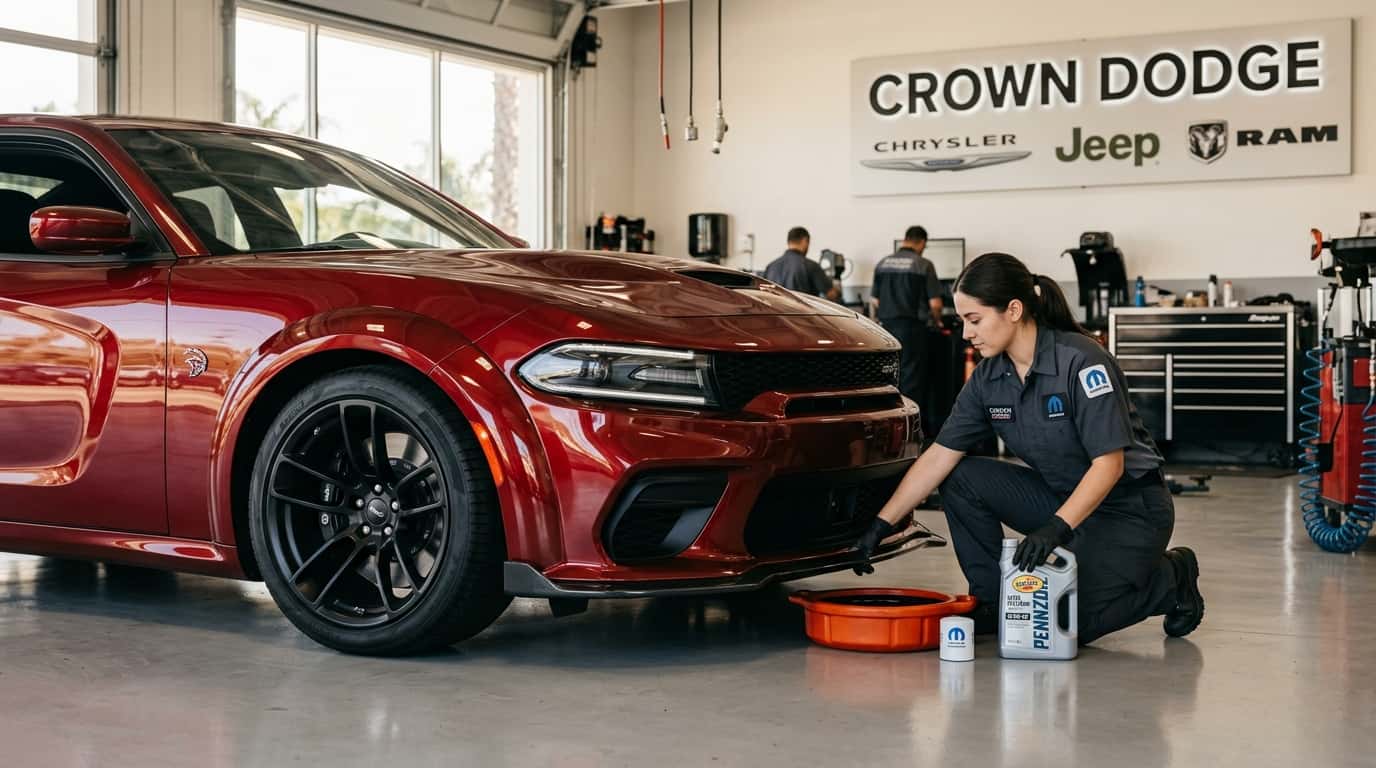
What is the Recommended Maintenance Schedule for a Late Model Dodge?
Late-model Dodge vehicles, like the 2026 Dodge Charger, follow a recommended maintenance schedule centered around 7,500-to-10,000-mile or 6-month engine oil and filter service intervals. Essential services include tire rotations every 7,500 miles, cabin and engine air filter replacements every 15,000 to 30,000 miles, brake fluid flushes every 2 years, and spark plug or cooling system services at 60,000 to 100,000 miles.
Adhering to factory-specified service benchmarks ensures long-term powertrain durability, maintains vehicle fuel economy, and preserves resale value. While modern onboard engine oil change indicator systems calculate oil life based on engine revolutions, operating temperatures, and idling time, Stellantis factory guidelines stipulate that you should never exceed 10,000 miles or 12 months between oil changes. Under severe operating conditions—such as frequent short trips, sustained idling, or regular trailering—oil changes should occur sooner, often capped at 8,000 miles or 350 engine hours.
For late-model performance vehicles and family haulers like the 2024 Dodge Durango, the recommended routine service tasks progress along a structured mileage timeline:
- Every 7,500 to 10,000 Miles (or 6 Months): Replace the engine oil and Mopar oil filter. Rotate all four tires to balance tread wear, inspect the brake pads, rotors, and hoses, and check all under-hood fluid levels including coolant, power steering, and washer fluids.
- Every 15,000 Miles: Inspect the front suspension, tie rod ends, and boot seals. Replace the cabin air filter to maintain HVAC efficiency and clean interior air quality.
- Every 30,000 Miles: Replace the engine air filter element to prevent dust and road debris from entering the intake manifold. Inspect the transfer case fluid on all-wheel-drive models and evaluate the exhaust system for physical damage or loose heat shields.
- Every 60,000 Miles: Inspect and replace transmission fluid and filter assemblies if the vehicle is regularly driven under severe-duty conditions, such as towing heavy loads. Replace spark plugs on high-output engines to maintain optimal combustion efficiency.
- Every 100,000 Miles (or 10 Years): Perform a complete engine coolant drain, flush, and refill with factory-approved OAT coolant. Inspect the accessory drive belts and evaluate all suspension components for wear.
Local driving environments directly influence how quickly components degrade. Drivers navigating the Conejo Grade from Camarillo subject their engines and transmission cooling systems to sustained uphill climbs under high thermal loads, making regular fluid and filter maintenance vital.
To keep your vehicle on track with factory maintenance, you can book an appointment through our online service scheduler, contact our service team at (805) 918-4486, or stop by our Ventura location at 6300 King Dr for expert vehicle care.
Table of Contents
- What Does Mopar Service Include for Your 2024 Dodge Scheduled Maintenance?
- Should You Use an Independent Repair Shop or a Certified Dodge Dealership in Ventura?
- How Should You Check Your Dodge Engine Oil Between Scheduled Services?
- Where and How to Schedule Official Dodge Service and Express Maintenance in Ventura
- Frequently Asked Questions About Dodge Maintenance and Service
- Keep Your Dodge Running at Peak Performance
What Does Mopar Service Include for Your 2024 Dodge Scheduled Maintenance?
Mopar service refers to factory-authorized maintenance performed by certified technicians using Original Equipment Manufacturer parts, specialized diagnostic equipment, and brand-specific procedures designed specifically for Chrysler, Dodge, Jeep, and RAM vehicles. Originally established by Chrysler in 1937 as a line of motor antifreeze, Mopar has evolved into the dedicated original equipment parts and service division for Stellantis vehicles.
Choosing factory Mopar service for a 2024 Dodge model ensures every maintenance task meets strict engineering standards. Rather than using generic, one-size-fits-all components, Mopar service utilizes genuine OEM parts designed to mirror the exact fit, finish, and structural integrity of the original components installed at the assembly plant.
Standard Mopar scheduled maintenance for late-model vehicles involves several essential technical components:
- Engine Lubrication and Filtration: Service procedures utilize factory-approved Pennzoil synthetic oil blended with specific additive packages to guard against thermal breakdown, alongside genuine Mopar oil filters engineered with high-capacity synthetic media to capture fine particulate matter.
- Multi-Point Safety and Vehicle Inspections: Technicians execute a comprehensive multi-point diagnostic inspection covering the braking system, steering linkage, CV boots, suspension struts, battery health, and exhaust routing.
- Advanced Vehicle Electronics and Module Scanning: Factory diagnostic tools link directly with your vehicle’s onboard computers to read diagnostic trouble codes, complete required software updates, and ensure active safety hardware like adaptive cruise control remains correctly calibrated.
- Warranty Integrity and Documentation: Maintenance records are logged directly into the central manufacturer database. This warranty-safe documentation confirms that all services comply with factory warranty mandates.
In addition to primary Mopar components, Stellantis offers b pro auto replacement parts as a factory-backed secondary line for high-wear maintenance items like brake rotors, batteries, and hub assemblies. Whether servicing a high-horsepower performance model or a daily driver like the 2024 Dodge Durango, genuine Mopar service maintains precise factory specifications throughout the life of the vehicle.
Should You Use an Independent Repair Shop or a Certified Dodge Dealership in Ventura?
While independent repair facilities in Ventura can perform general maintenance like oil changes and tire rotations, a certified Dodge dealership provides specialized Mopar tools, factory-trained technicians, proprietary diagnostic computer software, and direct access to manufacturer technical updates that generic shops cannot offer.
Modern Dodge vehicles incorporate complex electronic control networks, multi-stage engine management systems, and brand-specific mechanical components. Evaluating whether to use a local general repair shop or a certified dealership comes down to several key operational differences:
- Technician Specialization and Training: Dealership technicians undergo continuous, hands-on manufacturer certification programs tailored exclusively to Stellantis vehicle platforms. They specialize daily in high-performance engines like the 3.6L Pentastar V6 and 5.7L HEMI V8, whereas independent mechanics work across dozens of different domestic and import vehicle brands.
- Diagnostic Tools and Software Calibration: Independent shops frequently rely on aftermarket multi-vehicle diagnostic scanners that may fail to read brand-specific control modules or complete complex software re-flashes. Certified dealerships utilize proprietary WiTECH diagnostic systems to update vehicle modules instantly and execute factory recalibrations.
- Parts Quality and Engineering Specs: Non-dealer shops often install universal aftermarket fluids, generic oil filters, or low-cost brake pads to reduce expenses. Dealerships install exclusively genuine Mopar parts and accessories designed and tested specifically for your vehicle’s exact engine and chassis specs.
- Recall and Technical Service Bulletin Access: A certified dealership automatically cross-references your vehicle’s VIN against active recall campaigns and technical service bulletins during every service visit, completing necessary safety updates free of charge.
Environmental factors in coastal California also demand specialized mechanical attention. Vehicles operated near the sandy beaches and salt-laden air of Oxnard face accelerated oxidation on exposed metallic surfaces, including brake rotors, exhaust hangers, and suspension hardware. Certified technicians know exactly how to inspect and service these components using protective coatings and Mopar anti-corrosion hardware.
How Should You Check Your Dodge Engine Oil Between Scheduled Services?
Checking your Dodge engine oil monthly between scheduled maintenance visits requires parking the vehicle on a level surface, allowing the warm engine to rest for five minutes, removing and cleaning the oil dipstick, reinserting it fully, and reading the fluid level between the minimum and maximum indicator marks while assessing color and texture.
Although modern vehicles feature dashboard oil life monitoring displays, physical monthly inspections remain critical for detecting unexpected fluid consumption, minor external leaks, or internal fluid contamination before mechanical damage occurs.
Follow this step-by-step process to perform an accurate monthly oil check on your Dodge:
- Bring the Engine to Operating Temperature: Drive the vehicle briefly until the engine reaches its normal operating temperature. Park on flat, level ground, turn off the ignition, and set the parking brake.
- Allow Fluid to Drain Back: Wait approximately 5 minutes. This delay allows the oil circulating throughout the upper cylinder heads and engine galleries to drain fully back into the oil pan for an accurate reading.
- Locate and Remove the Dipstick: Open the hood and locate the engine oil dipstick handle, which is typically marked with a yellow or bright yellow-green ring. Pull the dipstick straight out of its tube.
- Wipe Clean and Reinsert: Wipe the metal end of the dipstick completely clean using a lint-free shop towel or paper napkin. Reinsert the dipstick fully into the tube until the handle seats securely.
- Withdraw and Read the Level: Pull the dipstick out a second time and hold it horizontally. Examine the oil line relative to the markings at the tip. The fluid level should sit squarely within the crosshatched safe zone or between the upper and lower indicator holes.
- Evaluate Oil Quality and Color: Inspect the physical condition of the oil. Clean, healthy engine oil appears translucent with an amber to light brown color. If the oil appears thick, opaque black, or smells heavily of fuel, schedule a service appointment soon. If the oil exhibits a milky, frothy appearance, stop driving immediately, as this indicates engine coolant contamination requiring urgent professional inspection.
If the oil level rests at or below the minimum indicator mark, add the recommended oil viscosity—such as SAE 5W-20 or SAE 5W-30 full synthetic—in small quarter-quart increments through the oil filler cap, rechecking the dipstick until the fluid reaches the safe upper zone.
Where and How to Schedule Official Dodge Service and Express Maintenance in Ventura
Official Dodge scheduled maintenance in Ventura is available through authorized dealership service departments that offer both convenient online booking tools for comprehensive repairs and dedicated express service lanes for routine, no-appointment maintenance.
Vehicle owners can select between two primary service workflows based on their maintenance requirements and personal schedule:
- Mopar Express Lane Maintenance: Designed for quick, routine upkeep, the express lane requires no advance appointment. Drivers can pull directly into the service drive for essential tasks including standard synthetic oil and filter changes, tire rotations, brake pad wear measurements, battery voltage tests, air filter swaps, and wiper blade replacements. Experienced technicians work in streamlined teams to perform these routine procedures and get you back on the road rapidly.
- Full-Service Appointment Scheduling: For comprehensive mileage-based maintenance intervals—such as 30,000-mile filter and fluid services, transmission flushes, spark plug replacements, or diagnostic troubleshooting—booking a dedicated appointment is recommended.
Scheduling an appointment online takes just a few minutes through our digital service portal. Vehicle owners can enter their vehicle’s year, model, and current mileage, view recommended maintenance packages, select specific individual services, choose an available date and time slot, and request convenient transportation options like shuttle service or loaner vehicles. Automated text or email confirmations keep you informed, while digital vehicle inspection reports provide photo and video updates straight to your smartphone during the service process.
Frequently Asked Questions About Dodge Maintenance and Service
Q: How does the Dodge automatic oil change indicator system calculate service intervals?
The Dodge automatic oil change indicator system uses an engine duty-cycle algorithm that monitors engine speed, operating temperature, ambient temperature, trip lengths, idling time, and towing loads. Rather than using a simple mechanical timer, the system calculates actual oil degradation based on real-world driving habits, illuminating a dashboard alert when service is required. Regardless of what the indicator displays, factory guidelines mandate changing the engine oil at least once every 10,000 miles or 12 months.
Q: What maintenance adjustments are required for vehicles driven under severe conditions?
Severe driving conditions include frequent short trips under 10 miles, prolonged engine idling, driving in dusty or off-road environments, sustained high-speed driving in hot weather, or regular trailer towing. Under these operating conditions, maintenance intervals should be accelerated. Engine oil changes should occur around every 5,000 to 8,000 miles, cabin and engine air filters should be replaced every 15,000 miles, and transmission or transfer case fluids should be serviced at 30,000-mile intervals to protect key driveline components from thermal stress.
Q: Does using an independent repair shop void my Dodge factory warranty?
No, utilizing an independent repair shop for routine maintenance will not automatically void your Dodge factory warranty. Under federal law, vehicle owners have the right to service their vehicles at any qualified repair facility. However, you must ensure the shop uses parts and fluids that meet exact original equipment specifications, and you must maintain detailed, itemized receipts and service records. If a mechanical failure occurs due to improper service procedures or non-compliant aftermarket parts, warranty coverage for that specific repair may be denied.
Q: Why is brake fluid replacement recommended every two years regardless of mileage?
Brake fluid is naturally hygroscopic, meaning it absorbs ambient moisture from the air over time through microscopic pores in rubber brake hoses and reservoir seals. Excess water content lowers the boiling point of the brake fluid, which can cause pedal fade under heavy braking. Additionally, trapped moisture accelerates internal corrosion within anti-lock braking system pumps, calipers, and wheel cylinders. Replacing the fluid every 2 years removes absorbed moisture and protects sensitive braking hardware.
Q: What documentation should I keep if I perform my own minor fluid checks or top-offs?
If you perform minor maintenance or fluid top-offs yourself, maintain a detailed logbook detailing the date, exact vehicle mileage, type of fluid added, and the specific brand or specification used. Save itemized store receipts showing the purchase of factory-compliant fluids or Mopar parts. Keeping organized records establishes a clear history of proper vehicle care, which protects your warranty coverage and helps maximize trade-in value when upgrading your vehicle.
Keep Your Dodge Running at Peak Performance
Following your vehicle’s factory-recommended maintenance schedule is the most effective way to protect your engine, preserve smooth shifting performance, maintain fuel efficiency, and ensure long-term reliability on every drive. From routine 7,500-mile oil changes and tire rotations to major 60,000-mile fluid and filter services, consistent care prevents premature mechanical wear and keeps your Dodge operating at its best.
At Crown Dodge Chrysler Jeep RAM, our factory-certified technicians specialize in the full Stellantis lineup, utilizing genuine Mopar parts, specialized diagnostic equipment, and warranty-compliant procedures tailored specifically to your vehicle. Whether you prefer the speed of our no-appointment Mopar Express Lane or want to plan ahead for comprehensive maintenance, our team is dedicated to providing efficient, transparent, and expert automotive care.
Take the next step in protecting your vehicle’s performance and long-term value today. Schedule your upcoming service appointment online, call our dedicated service desk directly at (805) 918-4486, or drop by by visiting our Ventura service center to speak with a service advisor.
© 2026 Crown Dodge Chrysler Jeep RAM. All rights reserved.
0 comment(s) so far on Dodge Scheduled Maintenance in Ventura, California