






Dodge Brake Service in Ventura California
What Is the Difference Between 4-Piston and 6-Piston Brembo Brakes on Dodge Models?
Six-piston front Brembo calipers feature six individual hydraulic pistons pushing against larger brake friction pads across a wider contact patch on rotors measuring up to 16.1 inches, offering maximum heat dissipation and fade resistance. Four-piston Brembo systems utilize four pistons on slightly smaller rotors, usually between 14.2 and 15.0 inches, delivering excellent stopping power for spirited street driving. While four-piston setups provide strong, responsive braking for daily commutes, six-piston calipers are engineered to withstand the severe thermal loads g enerated during repeated high-speed stops and track use.
Understanding how caliper design affects stopping performance starts with hydraulic pressure distribution. In a four-piston caliper, two pistons sit on each side of the brake rotor, clamping down on the pad surface when hydraulic fluid expands from pedal force. In contrast, a six-piston fixed caliper places three pistons on each side. Staggering three pistons along a longer brake pad ensures equal clamping pressure across the entire surface of the friction material. This uniform force prevents pad taper wear and minimizes localized hot spots on the rotor surface.
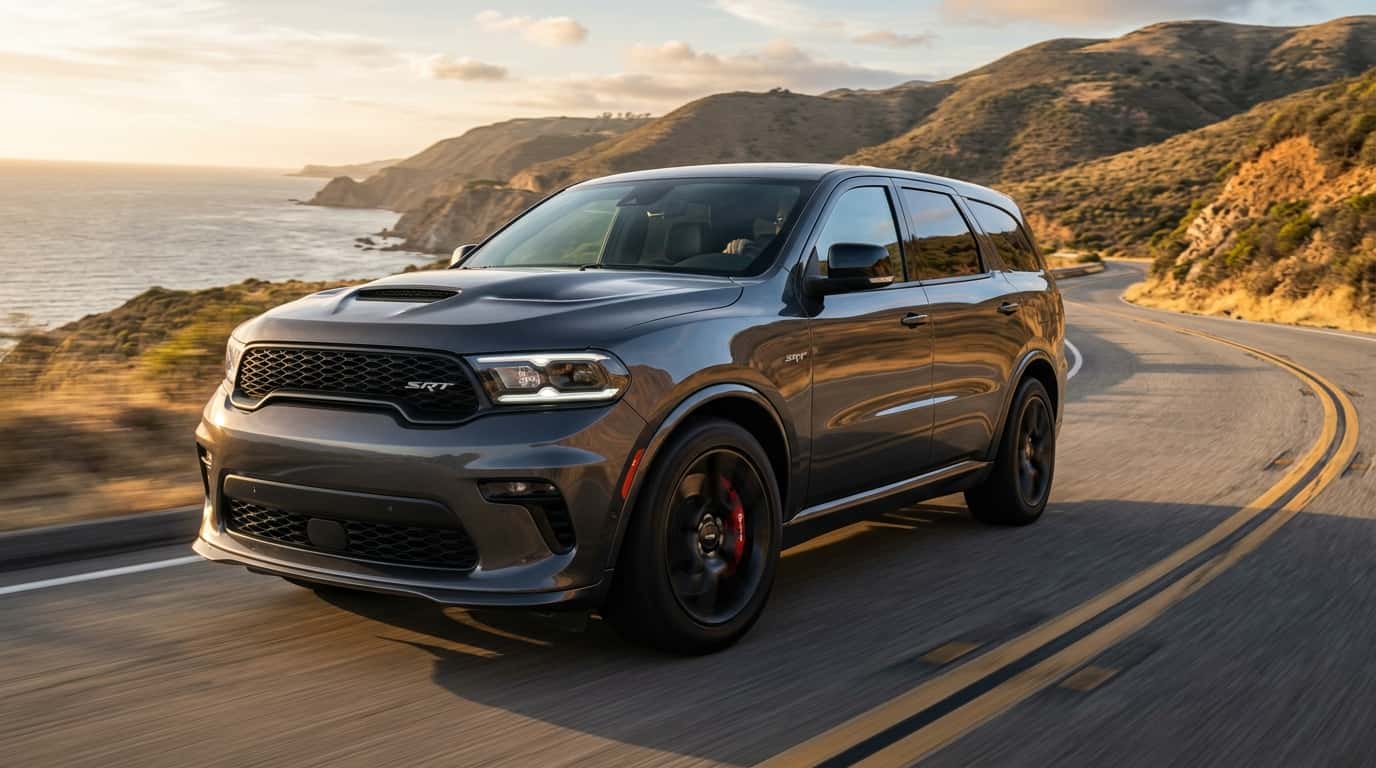
Heat management remains the single biggest differentiator between these two performance braking systems. When decelerating a high-horsepower muscle car or a broad-shouldered SUV like the 2026 Dodge Durango equipped with the 6.4L SRT HEMI V8, kinetic energy instantly converts into intense heat. The larger two-piece vented rotors paired with six-piston calipers provide a significantly higher thermal capacity, allowing the system to absorb and radiate heat much faster than a standard single-piston or four-piston configuration. Drivers who frequently descend the steep incline of the Conejo Grade near Camarillo will notice that six-piston setups maintain a firm, consistent pedal feel even under sustained thermal load.
Choosing between four-piston and six-piston configurations usually depends on how the vehicle is driven and factory trim options. Dodge equips models like the R/T Scat Pack with standard four-piston front Brembos, which offer an ideal balance of aggressive bite, manageable dust production, and durable pad life for street use. Upgrading to six-piston front calipers—standard on SRT Hellcat models and optional via performance packages—delivers track-ready clamping force. When it is time for routine maintenance, drivers can visit our Ventura location on King Drive or use our online service scheduling tool to keep their high-performance braking system performing at factory standards. If you have questions about pad thickness or fluid flushes, feel free to give our service team a call for quick guidance.
Table of Contents
- How Much Stopping Distance Do Brembo Brakes Shave Off a Dodge Charger SRT?
- How Many Miles Do Dodge Brembo Brake Pads Usually Last?
- What Does It Mean When the Brake Light and ABS Light Both Illuminate on a Dodge Dashboard?
- How Do Aftermarket Big Brake Kits Compare to Factory Dodge Brembo Systems?
- What Braking Systems and Technology Feature on the 2026 Dodge Charger Daytona?
- Common Questions About Dodge Brake Repairs and Service
- What Are the Advantages of Certified Dodge Service at a Dodge Dealership?
How Much Stopping Distance Do Brembo Brakes Shave Off a Dodge Charger SRT?
Upgrading to six-piston Brembo brakes shaves approximately 15 to 20 feet off the 60-to-0 mph stopping distance of a heavy Dodge muscle car compared to standard cast-iron braking systems. A Dodge Charger SRT equipped with factory six-piston front calipers and wide performance tires can bring its total stopping distance down to an impressive 102 to 107 feet from 60 mph. Standard dual-piston or single-piston sliding calipers on non-SRT models typically require 120 to 125 feet under identical conditions.
The dramatic reduction in deceleration distance comes down to friction area, rotor diameter, and anti-fade capability. Factory Brembo systems pair rigid aluminium monoblock calipers with massive, directional vented rotors. Because the caliper body does not flex under extreme hydraulic pressure, 100 percent of pedal pressure transfers straight into mechanical clamping force. This instant bite allows the anti-lock braking system to modulate wheel speed right at the threshold of tire traction, keeping the vehicle stable while dragging speed down in a fraction of a second.
Thermal endurance plays an equally critical role during back-to-back emergency stops. Standard brake rotors can heat up rapidly, causing fluid vaporization, pad glazing, and brake fade that stretches stopping distances significantly on subsequent stops. Brembo two-piece rotors feature cast-iron friction rings attached to lightweight aluminium centers, separated by specialized cooling vanes that draw air through the center of the disc. This directional airflow keeps operating temperatures lower, ensuring that the second and third hard braking events stop just as quickly as the first.
Maintaining that short stopping distance requires keeping every component in peak working order. High-friction track and street pads generate considerable heat and dust, which can degrade brake fluid over time if left unserviced. Installing genuine Mopar brake components ensures that pad friction ratings, rotor metallurgy, and caliper seals match the original vehicle engineering precisely. Replacing worn pads before friction material drops below minimum tolerances preserves rotor surface integrity and guarantees maximum stopping performance when emergency deceleration is needed.
How Many Miles Do Dodge Brembo Brake Pads Usually Last?
High-performance Brembo brake pads on Dodge models typically last between 15,000 and 30,000 miles under standard street driving conditions. Because performance brake friction compounds utilize semi-metallic materials engineered for aggressive bite and heat tolerance rather than long service life, they wear faster than hard ceramic pads found on standard passenger cars. Drivers who engage in spirited driving or frequent track days may see pad life drop closer to 10,000 miles, whereas steady highway commuters can sometimes stretch pad life toward 35,000 miles.
Several key factors dictate how quickly high-performance friction material wears down on daily driven Dodge vehicles:
- Driving environment: Stop-and-go coastal traffic along Pacific Coast Highway in Oxnard requires frequent pedal application, generating continuous friction and accelerating pad wear compared to open highway cruising.
- Vehicle weight and load: Heavier vehicle platforms like the 2026 Dodge Durango put more weight on the front pads during hard deceleration, transferring kinetic energy directly into friction material consumption.
- Driving style: Aggressive trail-braking, late braking into corners, and rapid downhill descents generate elevated temperatures that wear down pad compound faster.
- Environmental exposure: Coastal humidity, road debris, and salt air can cause surface oxidation on iron rotors, which acts like sandpaper against the pad face during initial engagement.
Recognizing the early indicators of pad wear prevents costly rotor damage and maintains driver confidence behind the wheel. Brembo brake pads feature built-in acoustic wear indicators—small metal tabs that emit a high-pitched squeal when the friction layer wears down to approximately 3 mm. Ignoring this squeal eventually leads to metal-to-metal contact, resulting in deep rotor scoring, harsh grinding noises, and severely compromised stopping power.
During routine oil changes and maintenance visits, certified technicians perform a detailed multi-point inspection to measure inner and outer pad thickness using specialized calipers. Dodge service guidelines recommend inspecting pads, rotors, and fluid condition every 10,000-mile interval or 12 months, whichever comes first. Replacing pads promptly when friction material reaches 3 mm ensures even clamping pressure across the rotor face and prevents premature wear on expensive multi-piston caliper seals.
What Does It Mean When the Brake Light and ABS Light Both Illuminate on a Dodge Dashboard?
Simultaneous illumination of both the red brake warning light and the amber ABS light on a Dodge dashboard indicates a critical fault in the vehicle’s primary hydraulic braking system or electronic braking control unit. When both lights turn on together, the vehicle’s basic stopping ability may be compromised, and advanced safety features such as electronic stability control, traction control, and anti-lock pulse modulation are typically disabled.
The combined warning lights signal several specific system failures that require immediate technical evaluation:
- Severely low brake fluid: A drop in hydraulic fluid level—caused by worn brake pads or a leak in a brake line, caliper piston seal, or master cylinder—triggers the red fluid level sensor while disabling ABS operation.
- Hydraulic pressure loss: A loss of pressure in one of the dual hydraulic braking circuits prevents proper mechanical clamping force, prompting the system to log a safety lockout code.
- Electronic ABS module failure: Internal circuitry faults within the anti-lock brake hydraulic control unit prevent the module from communicating with wheel speed sensors, shutting down automated pressure regulation.
- Wheel speed sensor malfunction: Corroded wiring or damaged tone rings at individual wheel hubs feed corrupt speed data to the computer, turning off traction assistance.
Driving a vehicle with both warning lights illuminated presents a serious safety risk. Without functioning ABS, sudden pedal application during an emergency stop can cause the wheels to lock up completely, leading to a loss of steering control and extended skidding distances. If hydraulic pressure has dropped, the brake pedal may feel soft, spongy, or sink all the way to the floorboard.
When both lights appear, pull over safely to a secure location and check the brake fluid reservoir under the hood. If the fluid level sits far below the minimum line, do not attempt to continue driving the vehicle. Having the fault diagnosed with factory scanner equipment ensures that diagnostic trouble codes are read accurately, pin-pointing whether the issue stems from a simple wheel speed sensor replacement or a hydraulic master cylinder overhaul, allowing for precise and effective repairs.
How Do Aftermarket Big Brake Kits Compare to Factory Dodge Brembo Systems?
Factory Dodge Brembo braking systems offer direct OEM fitment, full integration with onboard safety electronics, and proven durability backed by factory engineering. Aftermarket big brake kits from manufacturers like Wilwood or StopTech provide customizable pad compounds, lightweight multi-piece rotor options, and specialized caliper finishes, but they often require custom mounting brackets, aftermarket brake lines, and careful wheel clearance verification.
Comparing key characteristics helps clarify the operational differences between factory Brembos and aftermarket setups:
| Brake System Feature | Factory Dodge Brembo System | Aftermarket Big Brake Kits |
|---|---|---|
| Engineering & Fitment | Direct bolt-on with factory knuckles and hubs | Requires aftermarket adapters and bracket kits |
| Safety System Tuning | Calibrated to factory ABS and stability controls | May alter pedal travel and ABS pump response |
| Component Availability | Readily available Mopar replacement parts | Proprietary pads and replacement rotor rings |
| Warranty Coverage | Covered under factory warranty terms | Independent aftermarket manufacturer warranty |
| Caliper Design | Heavy-duty monoblock aluminum casting | Forged or billet aluminum multi-piston designs |
System calibration remains the primary advantage of sticking with factory Brembo architecture. Modern Dodge vehicles rely on complex electronic brake control software that manages front-to-rear brake bias, hill start assist, emergency brake assist, and cornering brake control. Factory Brembo piston surface areas and fluid displacement volumes are coded directly into the body control module and ABS computer. Installing an aftermarket kit with different piston diameters can alter hydraulic fluid displacement, leading to an abnormally long pedal stroke or overly sensitive ABS intervention.
For owners maintaining or restoring performance, factory Brembo systems deliver long-term reliability and straightforward servicing. Replacement pads, rotor rings, pin kits, and hardware are designed to install without modification using standard shop tools. Authorized dealership service centers maintain exact factory specifications for rotor minimum thickness, caliper torque values, and bleeding sequences, ensuring that the high-performance stopping capability engineered into the vehicle remains uncompromised over thousands of miles.
What Braking Systems and Technology Feature on the 2026 Dodge Charger Daytona?
The 2026 Dodge Charger Daytona introduces advanced high-performance braking technology engineered to handle the instantaneous torque and vehicle weight of next-generation electrification. Scat Pack models fitted with the Track Package feature the largest brake package ever offered on a factory Dodge vehicle, incorporating massive 16.1-inch vented front rotors clamped by six-piston fixed Brembo calipers alongside 16.0-inch rear rotors with four-piston calipers.
Central to the vehicle’s braking capability is an intelligent electronic brake-by-wire system. This technology replaces the mechanical linkage between the brake pedal and master cylinder with electronic sensors that measure driver pedal input speed and force. The control module calculates deceleration demand instantly, seamlessly blending regenerative braking from the electric drive modules with mechanical hydraulic clamping force from the Brembo calipers.
Regenerative braking captures kinetic energy during deceleration, routing power back into the high-voltage battery pack while reducing mechanical pad wear during everyday driving. When the driver presses the pedal aggressively, the system transitions smoothly from motor regeneration to full six-piston hydraulic clamping force. Drivers can adjust regenerative braking intensity across multiple levels using steering wheel paddles, allowing for light coasting or aggressive one-pedal speed reduction into sharp corners.
To prevent thermal degradation during sustained track sessions, the vehicle incorporates functional front air curtains and underbody cooling ducts that channel cold air directly across the two-piece rotor faces and caliper bodies. This dedicated airflow lowers peak operating temperatures, protecting the electronic brake-by-wire hydraulic actuators and maintaining razor-sharp pedal response through repeated high-speed stops.
Common Questions About Dodge Brake Repairs and Service
How often should brake fluid be flushed on a Dodge vehicle?
Brake fluid should be replaced every two years or approximately 30,000 miles under normal operating conditions. Brake fluid is hygroscopic, meaning it absorbs moisture from the surrounding air over time. Moisture contamination lowers the boiling point of the fluid, which can lead to fluid vaporization, a soft brake pedal, and internal corrosion of expensive ABS hydraulic valves and caliper pistons.
What is the difference between ceramic and semi-metallic brake pads?
Semi-metallic pads contain metallic fibers mixed with friction binders, providing superior heat transfer and aggressive stopping power ideal for heavy-duty towing and high-performance Brembo systems. Ceramic pads utilize dense ceramic compounds, producing significantly less dust and operating quieter during street driving, though they generally lack the extreme thermal endurance required for track use.
Why do my high-performance Brembo brakes squeal when stopping slowly?
Light squealing at low speeds is common with semi-metallic Brembo brake pads and does not necessarily indicate a system fault. The high-friction materials and large pad surface areas vibrate slightly against the rotor face under light pedal pressure. Applying dedicated brake lubricant to pad backing plates or performing a proper bedding procedure often reduces low-speed noise.
Can worn brake rotors be resurfaced instead of replaced?
Rotors can be resurfaced on a precision brake lathe if the remaining disc thickness after machining remains above the manufacturer’s discard limit stamped on the rotor hat. However, two-piece drilled or slotted performance rotors should generally be replaced rather than turned to maintain structural integrity, proper cooling airflow, and uniform thermal expansion.
What causes a steering wheel to shake when applying the brakes at highway speeds?
A shaking steering wheel during braking usually indicates thickness variation or severe heat spotting on the front brake rotors, often referred to as warped rotors. Extreme temperature swings cause uneven friction material transfer onto the rotor face, creating high and low spots that push back against the brake pads and transmit vibration up through the steering column.
What Are the Advantages of Certified Dodge Service at a Dodge Dealership?
Entrusting your vehicle’s braking system to an authorized facility guarantees that every repair is performed by factory-trained technicians using specialized diagnostic tools and authentic parts. Factory certification means our technical team undergoes rigorous ongoing training covering Dodge mechanical systems, complex ABS hydraulics, and the latest electronic brake-by-wire calibration protocols.
When you bring your vehicle to our Ventura service facility, your maintenance visits are supported by dedicated resources that independent shops cannot match:
- Factory diagnostic equipment: Specialized tools interface directly with your vehicle’s onboard computers to read proprietary fault codes, perform automated ABS module bleeds, and reset sensor calibrations.
- Authentic Mopar components: We install engineered Mopar pads, rotors, sensors, and fluids designed specifically for your model’s weight, towing specs, and horsepower output.
- Technical service bulletin access: Direct connection to manufacturer databases allows our technicians to identify and address software updates, safety recalls, and factory service enhancements immediately.
- Complete warranty protection: Servicing your vehicle at an authorized center maintains your factory warranty coverage and ensures that covered repairs are handled without out-of-pocket delays.
Keeping your stopping performance at peak capability is essential for daily safety and high-horsepower confidence. Whether your vehicle requires a routine pad inspection, a full fluid flush, or complex ABS diagnostic work, our team is equipped to deliver thorough, expert care. Feel free to (805) 918-4486 to speak directly with a service advisor or arrange your next maintenance visit today.
© 2026 Crown Dodge Chrysler Jeep RAM. All rights reserved.
0 comment(s) so far on Dodge Brake Service in Ventura California